Mary’s Poverty
Other PeopleMary Lamb / Amy Hide’s poverty is not simply a shortage of cash: it is a condition she has lived inside without knowing how to name, and later learns to distinguish from the broader poverty of a life without time, choice, or connection. Her changing understanding moves from the material limits of life with Alan to a more complicated view of money as both useful resource and social measure. The novel makes that recognition gradual: Mary learns what deprivation looks like by noticing clothes, food, shops, books, and the people who seem able to live otherwise.
Poverty Before Recognition
For a long time Mary Lamb / Amy Hide does not know how poor she is. The narration describes her having grown accustomed to cheap clothing, a limited diet, and the demands of domestic life with Alan; these conditions have become ordinary enough not to register as deprivation. Her recognition arrives as a change in comparison. She has seen people whose lives appear better maintained, and understands that the hardship surrounding her is not the only possible form of life. The discovery does not erase what she has endured, but it breaks the assumption that life itself must be poor.
The difference becomes especially clear when Mary thinks of the poolside. She wants to swim and play, and senses that she could do so if she dared. The scene gives poverty an emotional dimension: she feels excluded from a life that appears available to others, rather than merely lacking a particular sum of money. Yet she does not simply envy wealth. Looking at prosperous people in shops and cars, she decides that what she wants from them is their time, not their money. The distinction becomes central to her understanding of what deprivation has taken from her.
Money, Exchange, and Time
The novel sets Mary’s circumstances beside a broader account of poverty among tramps. The narrator presents them as people without money because they will not sell what most people sell: their time. They retain that time, yet remain preoccupied with money. This account complicates any simple opposition between having cash and being free. Money is acquired through an exchange that consumes time, while refusing that exchange may preserve time without providing the means to live comfortably. The narrator’s address to the reader also makes the transaction feel ordinary and implicated: selling time is described as the common business of society, not an exceptional hardship.
A smaller exchange appears when Sharon finds two scraps of paper and considers what they might fetch. She weighs possible purchases, including spirits, and Mary first suggests money before agreeing to get alcohol. The moment does not establish that the scraps are sold, but it shows how quickly an object can be assessed for its exchange value and translated into an immediate want. In Mary’s later reflections, money is more practical and less abstract. At the shops, she learns to exchange it for goods under Mrs Botham’s informal supervision; she develops an eye for bargains and takes pleasure in saving money while spending it. Mrs Botham repeatedly credits her with saving money, although Mary observes that she has only been spending it carefully. Her new skill gives her a modest form of agency within limited means.
Learning the Social Meaning of Poverty
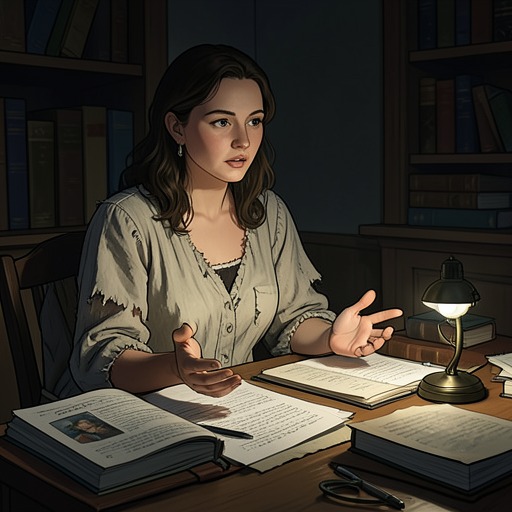
Mary’s education in money happens alongside an education in what other people read. Mr Botham’s shifting magazine carries accounts of illness, death, disaster, and jackpots, placing radically different fortunes within the same pages. Mrs Botham reads Al-Anon pamphlets about alcoholism, while Gavin Botham’s books introduce Mary to a wider world of language and subjects. These materials do not give Mary a comprehensive explanation of inequality, but they show her that private hardship sits among many kinds of public misfortune, aspiration, and advice.
Money itself draws sharply different judgments in the shops. Other people speak of it as though it has committed an unforgivable wrong; Mary, in contrast, secretly forgives it because it seems useful. Its value is concrete: it can be saved through careful shopping and turned into what the household needs. The contrast between her attitude and Mrs Botham’s recurring complaints prevents money from functioning as a single, settled symbol. It can represent exclusion and social grievance, but it can also make daily choices possible. Mary’s growing competence with bargains does not make her prosperous; it changes how she moves through the limited economy around her.
Poverty Beside Alcohol and Dependence
The novel places economic strain near repeated conversations about drinking, but it does not reduce one to the cause of the other. Sharon denies being an alcoholic, while the narration identifies her as one and describes drunkenness as an escape from the difficulty of being oneself. At the Botham home, Mrs Botham recounts her own history of alcohol dependence and insists that sobriety is an enduring condition rather than a status one simply leaves behind. She recalls having tried a range of substances before coming to value sobriety, and speaks of Al-Anon as a form of support Sharon refused to attend. These accounts locate Mary among people whose lives are shaped by recurring needs and dependencies, without claiming that poverty explains their drinking.
Mrs Botham’s repeated talk also has a domestic setting: Mary learns to let the conversation continue without pretending that she is absorbing every word, while Mrs Botham values having someone to talk to. Poverty, in this setting, is not an isolated statistic but part of a household’s everyday arrangements and strained relations. The distinction matters. The novel presents financial constraint alongside alcohol use, family care, and loneliness, while allowing each to retain its own history.
Time, Clothing, and the Limits of Change
Mary’s later thinking about clothes extends her recognition of poverty into a reading of social signals. She considers how clothing communicates money and sex, and how it can dramatize the lies people attempt to tell about both. After bathing, she dresses in white and red clothes bought with Jamie’s money. Russ emerges from Alan’s room and looks at her with a new mixture of challenge, respect, or fear; Mary understands that he thinks her clothes are misleading. The episode shows that money can provide access to new appearance without settling what that appearance means or how others will interpret it.
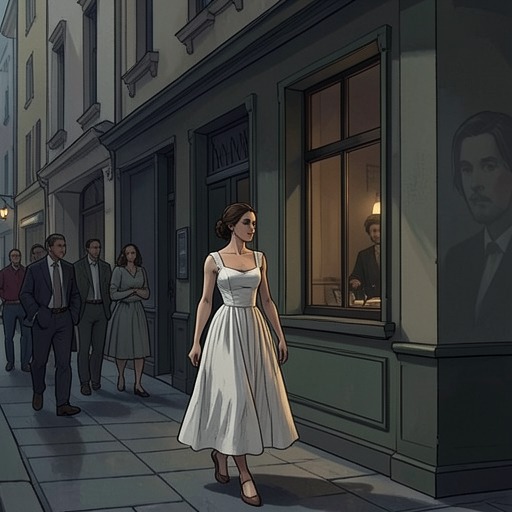
Her separation from Alan begins from a related awareness of what little time she has for herself. She waits in her bed, hears him coming upstairs, and has already made up her mind. Later, as she walks through the Park, she notices couples who seem to give one another pleasure simply by being present and by being themselves. She recognizes that she had never felt part of a couple with Alan: their relationship had not lightened her burden. Her wish for time therefore carries a relational meaning as well as an economic one. By the time Mary understands that life need not be poor in every sense, she has not escaped material hardship; she has gained a measure against which to see it. Money can help her choose, but it cannot substitute for time, mutual attention, or a life in which she feels included.